The long-term impact of building a plant nursery

Plants are living organisms that produce their own nutrition from sunlight, through the process of photosynthesis. Because they produce organic compounds from a non-living energy source, we call them autotrophic. This is what makes them the foundation of Earth's food chain. In addition, they produce the free oxygen that all animal life requires for breathing. In the process, they absorb carbon dioxide from the atmosphere, counteracting the threat of global warming. Plants also limit soil erosion, maintain the water cycle, and serve as natural filters against pollution. Without plants, life on Earth would be impossible.
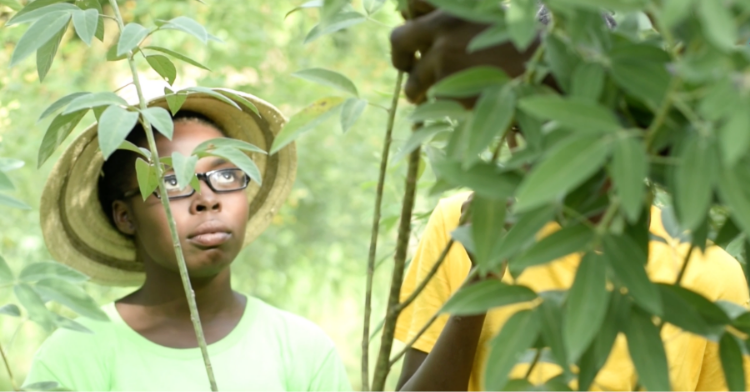
In Haiti, deforestation is a major concern, leading to air pollution, soil erosion, and water scarcity. The downstream effect of all this is a loss of food security and biodiversity, as well as dangers to public health, which only exacerbate the problems caused by political instability and violence.
In the midst of all this, my wife Fabienne's organization AFADLA is taking a stand. They have created and are working to expand a plant nursery at their Women's Center in our home region of Lafon. A nursery is a specially organized space for young plants to grow, to be nourished and protected before they are transplanted into the ground. It is thus a living metaphor for the work they are doing to care for and nurture the young women of the community, and to build a more sustainable future for all.

This facility will allow the community to produce young plants for reforestation, restoration of degraded ecosystems, and carbon sequestration. Each plant we distribute into the community will serve as a natural defense against ecological disruption and a reminder of our place in a harmonious natural order, the deeply entwined relationships that mean that our survival is bound up with one another's.

AFADLA's vision emphasizes the training of the young generation to take responsibility in the fight for the environment. Cultivating and propagating young plants is not only an ecological act: it is a civic act to save our portion of the planet. This commitment has a direct impact on the balance of Haitian society, where young people are the force of renewal.
The initiative is inspired by the ecological principle of “Think globally, act locally”. This principle reminds us that the well-being of the planet is a common heritage for all humanity. In AFADLA’s vision, plants go beyond their natural dimensions to become a tool for social and environmental transformation. The goal is not only to put plants in the ground, but to train young people to become environmental guardians.
At the AFADLA nursery, young people are already learning to produce and manage plants, restore green spaces, protect animals and plants and raise awareness in their communities. In their hands, plants become an educational tool, a symbol of life, and a lever of change for future generations. This commitment makes young people more responsible. They understand that every plant planted is a symbol of hope. Every plant cultivated is a promise for tomorrow.
You can help them expand and deepen the impact of this work by donating through Cultural Capital Haiti.
––Mackenley Jean-Pierre, Agronomist
(Translated by Michael Dylan Rogers)


Comments